
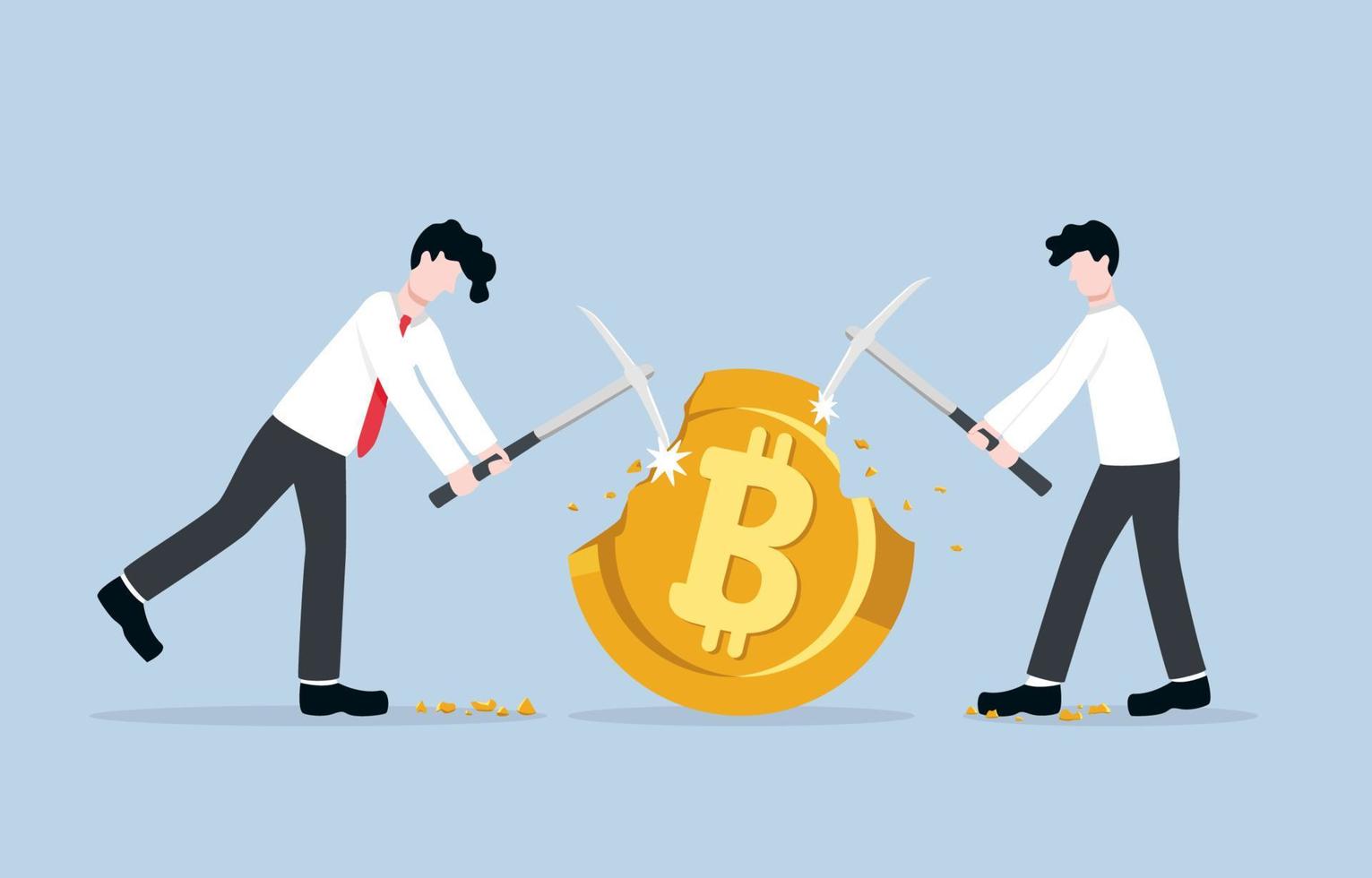
Bitcoin mining can look simple from the outside: buy an ASIC, connect it to electricity, join a mining pool, and start earning Bitcoin.
In reality, mining economics are constantly changing.
One of the most important factors is Bitcoin mining difficulty.
Difficulty affects how much computing work is required to find a valid Bitcoin block. As the network changes and more or less computing power joins the network, Bitcoin automatically adjusts its difficulty to keep block production close to its target.
For miners, this matters because the same ASIC can produce different economic results over time even when its hardware and electricity costs stay exactly the same.
Understanding difficulty is therefore essential for anyone considering Bitcoin mining, expanding a mining operation, or evaluating the long-term performance of mining hardware.
What Is Bitcoin Mining Difficulty?
Bitcoin mining difficulty is a measure of how difficult it is for miners to find a valid block.
Bitcoin uses a Proof-of-Work system. Miners use specialized hardware, primarily ASIC machines, to perform enormous numbers of calculations in an attempt to find a valid hash.
The network sets a target that a block hash must meet.
The lower the target, the harder it is to find a valid result.
Difficulty provides a practical way to represent this challenge.
You can think of it this way:
Higher difficulty = more computational work required to find a block.
Lower difficulty = less computational work required.
Importantly, difficulty is not something a mining company or individual miner can choose.
It is determined by the Bitcoin network according to its protocol rules.
Why Does Bitcoin Change Mining Difficulty?
Bitcoin is designed to produce blocks at a relatively predictable rate.
The network targets approximately one block every 10 minutes on average.
But the amount of computing power participating in mining is not constant.
Imagine that many new miners switch on thousands of powerful ASICs.
The network would suddenly have much more computing power competing to find blocks.
Without difficulty adjustments, blocks could be discovered faster than intended.
Bitcoin solves this through an automatic difficulty adjustment mechanism.
If blocks have been found faster than the target interval, difficulty increases.
If blocks have been found more slowly, difficulty decreases.
This allows the network to adapt to changes in total mining activity.
How Often Does Bitcoin Difficulty Adjust?
Bitcoin difficulty adjusts approximately every 2,016 blocks.
Because the network targets roughly 10 minutes per block, this corresponds to approximately two weeks.
The adjustment is automatic and does not require a central organization to decide whether difficulty should increase or decrease.
This is one of the mechanisms that allows Bitcoin’s mining system to remain decentralized.
For miners, it means that network conditions are not static.
Your ASIC might have the same hash rate tomorrow as it has today, but its share of the network’s total computing power can change.
That can affect how much Bitcoin the machine is expected to earn.
Bitcoin Mining Difficulty vs. Hash Rate
Difficulty and hash rate are closely related, but they are not the same thing.
Hash rate
Hash rate describes how much computational power is being used.
It can refer to:
- One ASIC
- A mining farm
- A mining pool
- The entire Bitcoin network
For example, an ASIC might be rated at a certain number of terahashes per second (TH/s).
Mining difficulty
Difficulty describes how challenging it is to find a valid Bitcoin block under the network’s current conditions.
When network hash rate grows significantly, difficulty often rises as well.
When network hash rate falls, difficulty may eventually decrease.
This relationship is important for miners because competition can increase even when the miner’s own equipment has not changed.
Why Higher Difficulty Can Reduce Mining Revenue
Consider two hypothetical situations.
Your ASIC produces the same hash rate in both situations.
Your electricity price is also unchanged.
Your hardware is running normally.
But Bitcoin mining difficulty increases.
Now your ASIC represents a smaller percentage of the total network’s computing power.
As a result, your expected share of block rewards can decrease.
This is one reason why miners cannot evaluate an ASIC only by looking at its advertised hash rate.
The machine needs to be evaluated against the broader network environment.
A useful way to think about mining revenue is:
Your mining output depends on your hardware + network conditions + Bitcoin price + operating costs.
Difficulty is one of the major network variables in that equation.
How Difficulty Affects ASIC Mining Profitability
Mining profitability is not determined by one number.
A simplified model looks something like:
Mining Revenue − Operating Costs = Mining Profit
But expected mining revenue depends partly on network difficulty.
Meanwhile, operating costs can include:
- Electricity
- Hosting
- Maintenance
- Cooling
- Pool fees
- Hardware depreciation
- Repairs
- Infrastructure costs
This means an increase in difficulty can put pressure on profitability from the revenue side.
If Bitcoin’s market price does not increase enough to offset the reduction in expected BTC production, a miner’s margins can become smaller.
For miners operating with expensive electricity or inefficient hardware, the effect can be particularly important.
A Simple Example
Imagine an ASIC generates a hypothetical $15 of Bitcoin revenue per day before operating costs.
Suppose your daily electricity and other operating expenses total $9.
Your simplified daily margin would be:
$15 − $9 = $6
Now imagine network conditions change and expected mining revenue falls to $12.
Your costs remain at $9.
Your new margin becomes:
$12 − $9 = $3
Nothing happened to your ASIC.
Your electricity contract did not change.
Your operating system did not change.
The network economics changed.
This is why experienced miners monitor network conditions instead of assuming that today’s profitability will remain the same for months or years.
What Happens When Difficulty Increases?
A difficulty increase generally means miners need more computing work to find blocks under the new network conditions.
For an individual miner, this can translate into lower expected BTC production per unit of hash rate, assuming other variables remain constant.
The impact can become significant when:
- New mining hardware enters the network
- Existing mining farms expand
- Older hardware is replaced with more efficient machines
- Large operators increase their available hash rate
- Mining conditions become attractive enough to encourage additional investment
This creates an important competitive dynamic.
When mining becomes more attractive, additional computing power can enter the network.
That additional competition can contribute to higher difficulty.
What Happens When Difficulty Decreases?
The opposite can happen when a meaningful amount of mining capacity leaves the network.
If miners shut down machines because operating costs are too high or market conditions become less attractive, network hash rate can fall.
After the relevant adjustment, difficulty can decrease.
For remaining miners, this can improve expected Bitcoin production per unit of hash rate.
However, lower difficulty does not automatically mean that mining is profitable.
Electricity prices, Bitcoin’s market price, hardware efficiency, fees, and other costs still matter.
Why ASIC Efficiency Matters Even More as Difficulty Changes
Mining difficulty is outside your control.
Hardware efficiency is not.
This is one reason miners pay close attention to J/TH, or joules per terahash.
J/TH measures how much energy an ASIC uses to produce a unit of computing power.
Generally, a lower J/TH indicates better energy efficiency.
Imagine two machines producing similar hash rates.
One consumes significantly less electricity.
If electricity is a major part of your operating cost, the more efficient machine may provide greater protection when mining margins become tighter.
This is particularly relevant when network difficulty increases.
Efficient hardware does not eliminate mining risk, but it can improve the economics of operating when conditions become more competitive.
Difficulty Makes Hardware Selection a Long-Term Decision
Buying an ASIC is not simply a question of:
“How much Bitcoin can this machine mine today?”
A better question is:
“How efficiently can this machine operate across changing network conditions?”
When evaluating hardware, consider:
Hash rate
How much computing power does the machine provide?
Energy efficiency
How much electricity does it consume relative to its hash rate?
Purchase price
How much capital is required to acquire the machine?
Operating costs
What will it cost to keep the ASIC running?
Expected useful life
How long can the machine realistically remain operational and economically useful?
Network conditions
How might changes in difficulty affect expected production?
Looking at all these factors provides a more realistic picture than focusing on hash rate alone.
Difficulty and Bitcoin Price Work Together
Mining economics are also heavily influenced by Bitcoin’s market price.
Suppose difficulty increases.
If Bitcoin’s price rises significantly at the same time, the value of the Bitcoin being mined may increase enough to offset some of the pressure on margins.
But if difficulty rises while Bitcoin’s price remains flat or declines, miners can face a more difficult operating environment.
This is why mining profitability should be viewed as a dynamic model rather than a fixed calculation.
A profitability estimate is a snapshot based on assumptions.
The actual result can change as the network changes.
Difficulty and the Bitcoin Halving
Bitcoin’s block subsidy is periodically reduced through the halving mechanism.
A halving reduces the number of newly created bitcoins included in the block reward.
This creates another important variable for miners.
When the block subsidy decreases, miners may need:
- Higher efficiency
- Lower electricity costs
- Better infrastructure
- Higher Bitcoin prices
- Stronger operational management
to maintain similar economics.
Difficulty and the block subsidy therefore belong in the same broader mining analysis.
A miner evaluating a long-term investment should not calculate ROI using today’s conditions alone.
Why Mining Pools Matter
Most individual miners do not attempt to mine Bitcoin completely alone.
Instead, they generally participate in mining pools.
A mining pool combines the hash rate of many miners and distributes payouts according to the pool’s payout system and the miner’s contributed work.
This can make income more predictable than attempting to receive an entire block reward independently.
However, pool fees and payout structures also affect the economics.
When calculating mining profitability, miners should therefore consider the pool’s fee structure as part of operating expenses.
Monitoring Difficulty Should Be Part of Your Mining Strategy
If you operate mining equipment, it is useful to monitor network conditions regularly.
Important metrics can include:
- Bitcoin mining difficulty
- Network hash rate
- Bitcoin price
- Block subsidy
- Mining pool fees
- ASIC efficiency
- Electricity cost
- Machine uptime
- Daily BTC production
- Revenue per TH/s
Looking at these metrics together provides more useful information than following any single number.
For example, an increase in difficulty may look negative by itself.
But if Bitcoin’s price has also increased significantly and your operation has highly efficient hardware, the overall impact may be different.
Mining decisions should therefore be based on the complete operating picture.
How Professional Hosting Can Help
Network difficulty cannot be controlled by an individual miner.
But many operational factors can be managed.
Professional mining hosting can help miners focus on running their hardware while infrastructure is handled within a dedicated environment.
Depending on the provider and agreement, hosting can include services such as:
- Power infrastructure
- Cooling
- Hardware monitoring
- Network connectivity
- Maintenance support
- Physical security
- Operational monitoring
For larger operations, these factors can become increasingly important.
An ASIC that is offline is not generating mining revenue.
This makes uptime and infrastructure management important parts of mining economics.
Learn more about the practical side of professional mining operations in our Bitcoin Mining Hosting Guide and Bitcoin Mining Hosting vs. Home Mining resources.
Uptime Is Just as Important as Efficiency
Consider two miners with identical ASICs.
Miner A operates at 98% uptime.
Miner B operates at 85% uptime.
Even if both machines have exactly the same hash rate and electricity price, their actual mining output can be very different.
Downtime can result from:
- Power problems
- Network interruptions
- Overheating
- Hardware failures
- Maintenance
- Poor environmental conditions
This is why professional mining operations track uptime carefully.
Efficiency determines how much energy is required to produce computing power.
Uptime determines how consistently that computing power is actually available.
Both matter.
What Can Miners Actually Control?
One of the most useful ways to think about mining difficulty is to separate external variables from controllable ones.
You cannot directly control:
- Bitcoin mining difficulty
- Network hash rate
- Bitcoin block subsidy
- Bitcoin market price
You can influence:
- ASIC selection
- Energy efficiency
- Electricity costs
- Hosting costs
- Maintenance quality
- Uptime
- Cooling
- Hardware utilization
- Expansion strategy
- Operational monitoring
This distinction is important when building a mining strategy.
You cannot make Bitcoin difficulty lower.
You can, however, build an operation that is better prepared for changing difficulty.
How to Prepare for Increasing Mining Difficulty
If you’re planning a mining operation, consider several practical steps.
Choose efficient hardware
Start with machines that offer competitive energy efficiency rather than focusing only on maximum hash rate.
Understand your electricity costs
Electricity is one of the most important recurring expenses in mining.
Even a powerful ASIC can become difficult to operate economically if its energy cost is too high.
For more information, see our guide to Bitcoin Mining Electricity Costs.
Track profitability regularly
Do not rely on the profitability estimate you calculated when you purchased the machine.
Recalculate it as network difficulty, Bitcoin price, electricity prices, and operating costs change.
Prioritize uptime
A highly efficient ASIC that spends significant time offline cannot deliver its full potential.
Plan hardware replacement
Older ASICs can become less competitive as newer and more efficient generations enter the market.
Think about scalability
A mining operation should be designed with future expansion in mind.
Infrastructure that works for a few machines may not be suitable for dozens or hundreds.
Bitcoin Mining Difficulty Is a Moving Target
One of the biggest mistakes new miners can make is treating mining profitability as a fixed number.
It isn’t.
The Bitcoin network is constantly changing.
Difficulty adjusts.
Hash rate changes.
Hardware becomes more efficient.
Bitcoin’s price moves.
Electricity costs change.
Mining infrastructure evolves.
All of these factors influence the economics of mining.
That is why a serious mining strategy should focus less on a single profitability estimate and more on building an operation that can adapt.
Final Thoughts
Bitcoin mining difficulty is one of the fundamental variables behind mining economics.
When difficulty increases, miners generally face greater competition for the available block rewards. When difficulty decreases, the expected Bitcoin production per unit of hash rate can improve, all else being equal.
But difficulty is only one part of the equation.
Hardware efficiency, electricity costs, uptime, hosting, maintenance, Bitcoin price, and long-term planning all influence whether a mining operation can remain economically viable.
For investors and miners, the goal is not to predict every future difficulty adjustment.
The more practical approach is to understand how changes in difficulty affect your operation and build your strategy around factors you can actually control.
At OurMiningClub, we focus on the infrastructure, hosting, and operational side of cryptocurrency mining. If you’re considering your first ASIC, expanding an existing setup, or evaluating professional mining hosting, contact our team to discuss your requirements and the numbers behind your operation.