
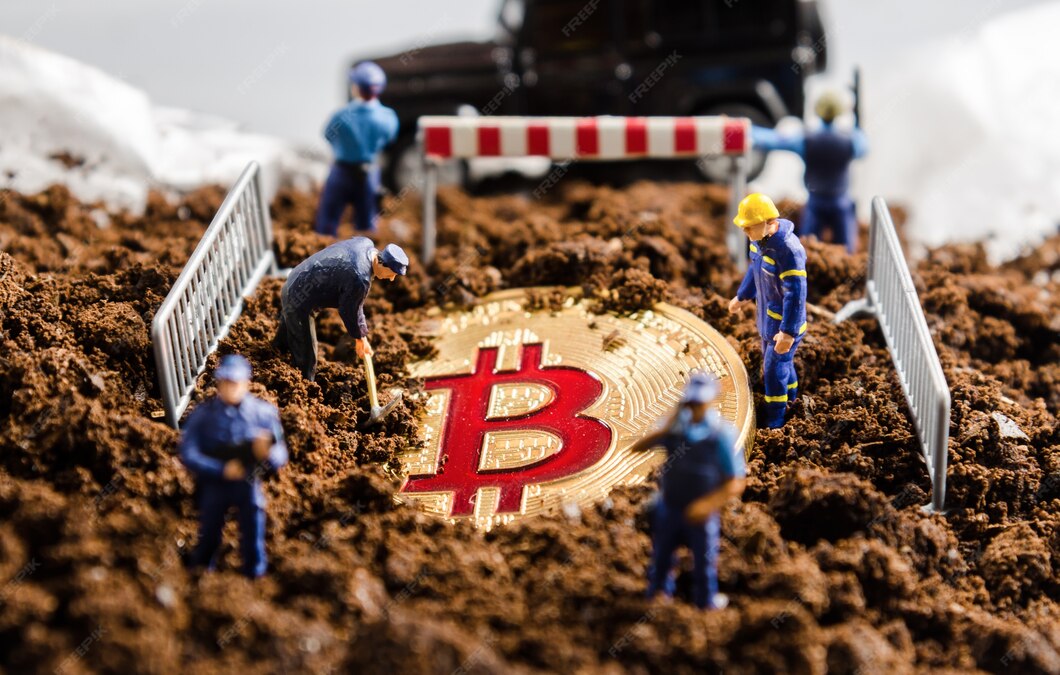
Bitcoin is the first and most famous cryptocurrency in the world. Today, it’s mined by massive farms with specialized machines, but things didn’t start that way. The history of bitcoin mining shows how far the technology has come—from hobbyists at home to billion-dollar industries.
The Early Days: Mining with CPUs (2009–2010)
When Bitcoin was launched in 2009 by Satoshi Nakamoto, mining was simple. Anyone with a regular computer processor (CPU) could download the Bitcoin software and start mining.
Back then:
-
Mining was easy, because very few people were on the network.
-
Rewards were huge compared to today—50 BTC per block.
-
Electricity costs were low, and laptops could handle the process.
It was a time when Bitcoin was worth almost nothing, but early miners who held on eventually became millionaires.
The Rise of GPU Mining (2010–2013)
As Bitcoin gained attention, more people joined the network. This made mining harder. CPU mining was no longer effective, so miners turned to graphics cards (GPUs).
Why GPUs?
-
They could solve Bitcoin’s algorithms much faster.
-
Gamers and tech enthusiasts already had access to them.
-
Mining became more competitive, but also more profitable as Bitcoin’s price started to rise.
This period marked the first big leap in the history of bitcoin mining—from casual hobby to serious investment.
ASICs Change Everything (2013–2016)
The next breakthrough was the creation of ASICs—Application-Specific Integrated Circuits. These machines were built solely for mining Bitcoin.
Key advantages:
-
Far faster than CPUs and GPUs.
-
Much more energy efficient.
-
Made older hardware completely obsolete.
This was also the era when professional mining farms started to appear, with warehouses full of ASICs working day and night.
Industrial-Scale Mining (2016–2020)
As Bitcoin’s value rose, mining became a global industry. Large companies built massive facilities in countries with cheap electricity, such as China, Iceland, and Russia.
During this time:
-
Mining difficulty skyrocketed.
-
Solo mining at home became nearly impossible.
-
Mining pools appeared, where individuals could combine resources and share rewards.
The history of bitcoin mining shows that this was when it shifted from small players to industrial giants.
Bitcoin hype design concept with people running to heap of bitcoins dropping out computer screen broken by mining pick flat vector illustration
Modern Era: Cloud Mining and Green Solutions (2020–2025)
Today, mining is more competitive than ever. Machines are extremely powerful, but costs are also high. For many beginners, the solution is cloud mining—renting mining power from a provider instead of buying hardware.
At the same time, environmental concerns have pushed the industry toward eco-friendly solutions:
-
Renewable energy sources (solar, wind, hydro, geothermal).
-
Smarter, more efficient ASICs.
-
AI tools to optimize farms and reduce waste.
Cloud mining makes the industry accessible again, allowing everyday people to take part in the same system as professional farms.
Why the History of Bitcoin Mining Matters
Understanding the history of bitcoin mining helps explain why things are the way they are today:
-
Mining got harder because Bitcoin became more valuable.
-
Technology advanced to keep up with competition.
-
The industry moved from homes to global data centers.
For newcomers, this history shows that while mining at home is no longer practical, there are still ways to join through cloud mining.
OurMiningClub: The Next Step in Mining History
At OurMiningClub, we believe the story of mining is still being written. We make it easy for beginners and professionals to mine Bitcoin without expensive hardware, high electricity bills, or technical headaches.
By joining us, you’re not just learning about the history of bitcoin mining—you’re becoming part of its future.
👉 Explore OurMiningClub’s mining plans and start your own chapter in Bitcoin’s history today.